Tuesday, March 29, 2011

2011-2012 Selection

Vise Library is pleased to announce that the iRead* selection for 2011-2012 is

Power Trip:

The Story of America's Love Affair with Energy

by Amanda Little


The author will be on campus on September 27th!

Library staff members will be working over the summer on putting together additional programs related to the book. If you have any ideas or suggestions, we would love to hear from you! Email us at library@cumberland.edu.

Here is some information about the book:

Amanda Griscom Little has been reporting and commenting on the changing environmental landscape for over a decade. From 2003-2007 she wrote “Muckraker,” the award-winning syndicated weekly column on energy and environmental policy for Salon.com and Grist.org. She is a contributing editor at Outside magazine, where she writes "Code Green," a monthly column on the people, products and ideas that are giving rise to the new green movement.

Her latest book, Power Trip, is a high-adventure romp through America's energy crisis, combining gonzo investigation with serious analysis of the history and future of energy.

Amanda Little choppers out to a Gulf of Mexico oil rig to explore the latest extreme-drilling technology; crawls down a New York City manhole to examine the guts of the grid; joins T. Boone Pickens on his private jet for a tour of his wind-farm fantasy; talks fuel logistics with top brass in the catacombs of the Pentagon; and shares a play-by-play of a silicone breast implant (it is petroleum derived, after all). A fast read about a critical subject that will appeal even to readers of every age, political persuasion, and level of expertise.

In a starred review, Kirkus called it "one of the best books on the energy crisis to emerge in recent years." J.P. Morgan selected Power Trip for its annual reading list, and bought 1000 copies. Robert Redford calls Amanda Little "the best of a new young perspective, a new voice of green." Jim Rogers, Chairman and CEO of Duke Energy said of Power Trip: “It's hard to imagine a book about energy that would appeal as much to a business executive as it would to an eco-activist--or, for that matter, to a soccer mom, a farmer, a politician or a student. Here it is. This provocative story about America's love affair with energy is a must-read for everyone.”

* What is iRead anyway?
Vise Library oversees a campus reading program known as
iRead, designed to affirm the importance of reading and to
create a common reading experience for the Cumberland
University community. We hope to encourage interaction
among students and faculty and to promote critical thinking
by facilitating reading and discussion of topical books

Be sure to check out the new iRead blog: powertripcu.blogspot.com!

Wednesday, March 23, 2011

iRead survey!

Please take a few minutes to fill out our iRead survey about this year's programs. We appreciate all feedback!

Tuesday, March 22, 2011

iRead recap: Dr. Claire S. King

On March 22nd, 2011, Cumberland University was treated to a presentation by Dr. Claire S. King of Vanderbilt University as part of Vise Library’s ongoing iRead program. Dr. King’s presentation was titled “Imitation of Life: Mediated Constructions of Gender”. She began by showing a provocative advertisement of a beautiful woman in lingerie. The text of the ad said “Bet you didn’t notice the armadillo”. Sure enough, there was an armadillo sitting on a chair next to the half-naked woman. Dr. King explained the various meanings of this ad, from woman as an object of heterosexual male gaze, to the humor inherent in pointing out that a va-va-voom female tends to draw attention to one’s eye to the exclusion of anything else in the picture.


Dr. King went on to explain the concept of “gendered looking”—the idea, exploited by movies, TV, and other visual media, that women are to be looked at and men do the looking. She tied this point back to Cumberland’s iRead selection, Bich Minh Nguyen’s Stealing Buddha’s Dinner, by pointing out the impact that popular culture and other children had on the author while growing up: Nguyen learned what she was “supposed” to eat, wear, and play by observing others. Indeed, her desire to be like her American classmates was strong enough to spur her on to seek out images and culture that would help her fit in.


Dr. King then explained the position of a particular scholar, Judith Butler, who argues that gender is culturally constructed and there is no such thing as “natural” gender. According to Butler, gender is a choice (often made unconsciously and sometimes even made for us, such as when baby girls are dressed in pink) and a performance we engage in every day. Butler challenges the idea of a “true, authentic self”, something that is a dearly held belief among many individuality-loving Americans. Instead, Butler argues that we all look outward for cues on how to adopt and form an identity.


Dr. King was an engaging speaker who was able to take complex and controversial theories and clearly explain them in an accessible way. Her friendly demeanor made it easy for audience members to ask questions both during and after the presentation. It was a real treat to hear Dr. King speak on the fascinating issue of gender and media.

Tuesday, March 8, 2011

Upcoming event

On March 22, we will welcome Dr. Claire King from Vanderbilt University, as she discusses gender and popular culture and their relationship in Stealing Buddha's Dinner. The event is scheduled to take place at 12:30 in the Heydel Fine Arts Center.

We would also like to congratulate the door prize winners from our last session: Marjorie Anderson (faculty), Presli Dickerson (student), and Simon Ryan (student).

Wednesday, February 23, 2011

iRead recap: Dr. Susan Schoenbohm

Susan Schoenbohm was the iRead guest speaker on February 22, 2011. Dr. Schoenbohm is currently the Practice Leader at the Nashville Zen Center. She has taught philosophy at the University of the South and Penn State University, and she teaches Buddhism in the religious Studies Program at Vanderbilt.

Dr. Schoenbohm’s talk was about the history, philosophy, and practices of Buddhism. She explained that there are different forms of Buddhism with different understandings of its teachings. Zen Buddhism is a form of Ch’an which practices Dhyana, sitting meditation, to learn the teachings of Buddha which can not be learned through words or doctrine. Like Buddha, enlightenment can be gained through meditation practices. She brought with her a statue of Buddha and explained in Zen philosophy it is a symbol of meditation. In other Buddhist traditions the statue of Buddha is revered in veneration of the enlightenment experience. However, Buddha is not considered a god and did not claim divinity.

Buddhism was born in Northern India and the early practices drew upon Hindu worship. As it spread throughout Asia, it took different routes and developed different forms. The early teachings of Buddha were transmitted orally and memorized by nuns and monks. Later they were written down but ultimately there were many variations in the teachings. There are two major branches of Buddhism, Theravada, and Mahayana. Mahayana tradition includes seated meditation and does not focus on the writings, but emphasizes what Buddha himself practiced. Practice undergirds all of the teachings. The most important truth in Buddhism is the realization that everything is impermanent. After all of Buddha’s seeking, he could not find anything that lasts forever.

Buddha was a Prince, Siddhartha Gautama, who was destined to be a holy man. His father did not want this so he protected him with a lavish lifestyle and kept him sheltered from the world. One day Buddha wonders from the palace and sees poverty, disease, old age, and death. He is inspired to understand suffering and goes on a spiritual journey in which he develops a philosophy based on Four Noble Truths. The First Noble Truth is called Dukkha meaning bitterness of life and its dissatisfying nature as it is always undergoing impermanence. The Second Noble Truth is the cause of life’s dissatisfactions, clinging to impermanent things. The Third Noble Truth is Nirvana. It is the cure for clinging and leads to freedom from entanglement with impermanent things. Seated meditation, as Buddha practiced, is itself enlightenment. The Fourth Noble Truth is the Eightfold Path, the practice of right thought and finding a balance.

During her talk, Dr. Schoenbohm led a short meditation session for the group. We focused on straight posture, breathing, and freeing our minds from thoughts. By practicing a lot, she told us, we can quiet our minds from fears, hopes, desires, and expectations. Through meditation we can develop understanding and compassion by realizing that we are all interconnected and that loss is inevitable.

Tuesday, January 25, 2011

Door Prize Winners!

Congratulations to Ryan Critchelow, Alissa Klein, and Scott Miller, the latest winners of our Stealing Buddha's Dinner door prizes!

Vise Library sponsored a photographic exhibition for its fourth iRead program on the book, Stealing Buddha’s Dinner. Mr. Bernie Ash, professional photographer and owner of Creative Photography on the Square in Lebanon was our featured artist. Mr. Ash began by setting the context of the times when he was 18 years old in 1965 and a recent graduate from Lebanon High School. Martin Luther King, Jr. was leading the Civil Rights movement, the cost of the average home was $13,000, and you could buy a cup of coffee for 5 cents. The War in Vietnam was being fought and young boys approaching 18 had to decide what to about the War. Some got married and others went to college to defer their service. Others were drafted and sent to fight in the infantry. It was a heavy decision. Many men stepped up and did not wait to be drafted. Bernie was one of these young men. He joined the Air Force and with one year of service left, he received orders to go to Vietnam for 12 months. Since he had a desire to become a preacher, he asked to be assigned as a Chaplain’s Assistant. Chaplains could not carry weapons so he travelled with the Chaplain to provide protection. He was sent to the Central Highlands of Vietnam, Phu Cat, near the South China Sea. It was great – except for the War!

During the Vietnam War 58,000 American soldiers were killed and 350,000 were wounded. Mr. Ash read the names of 15 young men from Wilson County who lost their lives. Several of these men were friends of his in high school, and one of them was an African American who was one of the first students to integrate Wilson County Schools. Over 2 million Vietnamese were also killed.

Mr. Ash carried an M-16 and a camera with him and took photographs of the people and places he saw on his tour of duty in Vietnam. He went with the Chaplain to visit villages, churches, and missionaries where they were helping people displaced by the War. As he guarded the jeep, he took photographs of the children he observed. Some not only lost their families, but their arms and legs as well. The “Girl with the Doll” (below) was taken as the little girl was leaving a missionary. She shows great joy in receiving this prize treasure. The other children in the photographs are all also smiling and playing like children everywhere. Even though they are living in a war zone, there is hope and innocence in their eyes.

Mr. Ash’s photographs, Children of Vietnam, will be exhibited in the Library until March 31, 2011.


Monday, January 24, 2011

Reminder!

iRead is tomorrow at 12:30 PM in the library. Local photographer, Bernie Ash, will be here to talk about his photographs of Vietnam. We will also have a reception with food and drinks. Be sure to join us!

Wednesday, January 12, 2011

Spring Events

Two events have been scheduled for the spring semester:

On January 25, local professional photographer Bernie Ash will speak about his photographic exhibit- Children of Vietnam. This event will take place at 12:30 in the Lawlor Room of the Vise Library.

On February 22, Susan Schoenbohm, practice leader at the Nashville Zen Center, will talk about the history, philosophy, and practices of Buddhism. This event will take place at 12:30 and is tentatively scheduled in Baird Chapel in Memorial Hall.

Look for more information about these events as they get closer!

Thursday, November 18, 2010

Presentation from November 16 iRead session

Jose Gonzales from the Coalition for Education about Immigration has shared his presentation from the November 16 iRead session. Click here to view the slides.

Wednesday, November 17, 2010

iRead recap: Jose Gonzales from the Coalition for Education about Immigration

Jose Gonzales from the Coalition for Education about Immigration (CEI) was the featured speaker. CEI’s mission is to provide the community with clear and accurate information that will help people adopt reasonable, fact-based conclusions about the immigration debate. He provided us with some interesting information about the immigrants in the United States and Tennessee.

In 2005 there were 35 million immigrants which are about 12% of the total population representing diverse social, religious and cultural backgrounds. Immigrants are from many nations and about half of them are from Latin America. Most are young, married, have jobs, and half report speaking English very well. A large percentage is in the United States legally as permanent residents or naturalized citizens. Only a small percentage are undocumented.

The majority of foreign born residents are Latino which is the largest and fastest growing minority in the United States. They participate in the economy by working, consuming products and services, and paying taxes, and they are active in the politics as both public servants and voters. More tortillas are sold in America than hot dogs and salsa outsells ketchup!

There are many myths about immigrants such as they are taking away jobs from other Americans and they come here to get on welfare and take advantage of social programs. Mr. Gonzales informed us that unauthorized immigrants are not eligible for these services. Additionally, unauthorized immigrants who have jobs are given a special identification number to pay income taxes and social security withholdings, even though they are not eligible for benefits. Furthermore, many immigrants are entrepreneurs and have their own business which brings jobs to the community.

Many immigrants come to Tennessee for the same reasons as those who are born in the United States: jobs, moderate weather, and good quality of life. They often leave their home countries due to undesirable economic or other bad conditions. Globalization of labor trends is another push factor. When the North American Free Trade Agreement (NAFTA) was passed by Congress, American agricultural products flooded the Mexican market. Many farmers could not compete so they left to find work on farms in the United States.

Mr. Gonzales ended his presentation with information about the Dream Act. Many children of undocumented immigrants come here at a young age and attend school from kindergarten to graduation with a high school diploma. Even though they have lived here most of their lives, they are not eligible to attend college. The Dream Act would allow them to adjust their legal status to be here legally. If passed, this legislation would enable many bright young immigrants to achieve their dream of a college degree.

This was the last iRead session for the fall semester. The sessions for the spring semester are in the final planning stages and will be announced as soon as they are finalized. The library staff would like to thank everyone who has attended the sessions so far, and we look forward to another semester full of great programs and speakers!

Tuesday, October 26, 2010

Door prize winners!

Congratulations to today's door prize winners:

Neil Birt
Shervonda Caples
Dr. Katie Smith (Psychology)

We'll have more to give away at our next session, so be sure to join us on November 16!

iRead recap: Dr. William Brinker

Our second iRead program for the book Stealing Buddha’s Dinner was a presentation by Dr. William Brinker, Emeritus Professor of History from Tennessee Tech. Dr. Brinker spoke about the consequences of the U.S. withdrawal from Vietnam on the Vietnamese. He began with information on the history of Vietnam. It had been a French colony and the Japanese had a wide influence there during WWII. There were various political groups who disapproved of colonization and wanted Vietnam to be an independent country. One of these groups was led by Ho Chi Minh, a Communist, who gave a speech in Hanoi in August 1941 declaring independence, quoting from the US Declaration of Independence. These rebels took over territories and placed them under Communist rule. When the French pulled out of Vietnam in 1954, the country was divided into two as part of the Geneva Congress agreement, with the North conceded to Ho Chi Minh. This is when the author’s family moved to South Vietnam.

South Vietnam was given a chance to create its own stable government with support from the United States. At first the U.S. sent advisors and trainers to help the South resist the Communists, but soon the conflict escalated. By 1960, the U.S. had over 500,000 combat troops there. The U.S. began withdrawing in 1973, and withdrew all troops by 1975. The author’s family had been part of the South Vietnamese who had resisted the Communist take over. They had to leave or they would have been imprisoned or killed. Bic and her family were able to board a naval vessel to get out of Vietnam before the Viet Cong took over the South.

When the U.S. withdrew in 1975, they severed all relationships with Vietnam and would not have anything to do with them, as if they did not exist. It was not until 1994 that the Clinton Administration recognized the legitimacy of the Vietnam government.

At first the Ho Chi Minh government was based on Stalinism, but it was not successful. They soon dismantled this system of government and allowed for capitalism and private enterprise. Dr. Brinker visited the country in 1988 and commented that everything was working beautifully. The Vietnamese people he met expressed no animosity toward Americans. Dr. Collier, who visited Vietnam in 2009, also indicated that here was no resentment toward Americans during his visit.

Monday, October 4, 2010

Door prize winners!

During the first iRead session, students were encouraged to register to win one of four library tote bags full of food related to Stealing Buddha's Dinner (as a side note, the most popular guess of what food was in the bags was Pringles). The drawing was held after the program, and the following people won:

Scott Gluck
Emily LaFever
Haley Stoever
Terry Williams

Congratulations to all of the winners! Be sure to join us for the next session on Tuesday, October 26 at 12:30 in Baird Chapel (look for more information about the program within the next couple of weeks).

iRead recap: Video conference with Bich Minh Nguyen

Vise Library was very fortunate to sponsor a video conference via the Internet with the author of Stealing Buddha’s Dinner, Bich Minh Nguyen. Professor Nguyen is currently an Assistant Professor of English at Purdue University in Indiana where she teaches literature and creative writing. She told the audience of Cumberland University students, faculty, and staff that she was honored to have her book selected for our campus reading program. Professor Nguyen began with an overview of the book and provided some background on her writing process.

The story begins when her family came to the United States in 1975 from Vietnam after the fall of Saigon. Her father and uncles had served in the army and they had to leave to avoid being imprisoned. It was a last second decision to leave their home. They raced to board a ship out and went to a refugee camp in Little Rock, Arkansas and later settled in Grand Rapids, Michigan. She grew up in this small town during the late 70’s and early 80s before the multiculturalism we have today, when there were no sushi restaurants. The culture clashes she experienced provided material for her writing and she commented that adversity is often good material for stories.

Professor Nguyen started writing Stealing Buddha’s Dinner about 8-9 years ago after working on some essays concerning immigration. She realized that her childhood memories would make an important story about her family, their heritage, and her past experiences. She chose the genre of non-fiction as the story was “too true” for fiction or poetry. Writing a memoir allowed for the intersection of reflection and narration. She was amazed at the memories that came back to her with clarity and commented that there is a reason you can not forget something, even a hostess cupcake. Food became the primary organizing principle for the book as she realized that many of her childhood memories involved eating. Food defines who we are and what we desire. Family get togethers, birthdays, Thanksgiving and other events revolve around food not just due to the need to survive, but also to support our identity. You can learn a lot about someone just by looking in their grocery cart or refrigerator. We all have to decide what to have for dinner and are defined by what we eat in terms of who we are, what we can afford and where we come from.

The author talked about growing up in the 1980s, “a bad fashion decade,” and her desire to fit-in somewhere. These feelings of being an outsider transcend race and gender. She remembers reading Pride and Prejudice, Little Women, and the Little House on the Prairie books and relating to the characters, even though it would seem she did not have anything in common with them. She saw herself as a completely American kid, eating junk food and watching TV, but felt that other people did not see her that way. She wanted to be acknowledged as an American. The definition of being American is expansive and inclusive, but it took a long time for her to believe it applied to herself. Books empowered her and gave a sense of permission to see what is possible. She encourages reading and believes in the power of literature to find insights and understanding.

Before publishing Stealing Buddha’s Dinner, the author shared the story with her family. They were interested in seeing her perspective and it opened up communication among them. It is a risk to write the truth, but it is more meaningful if it is “close to the bone.” Readers connect to a story that is real. She sees regrets as important to acknowledge in order to gain perspective. The author wishes she had not been so shy as a child and had asked more questions. She also wishes she had learned more about her Vietnamese heritage from her grandmother.

Professor Nguyen mentioned that she had visited Tennessee and that is important to go places and see new landscapes, as well as try new foods. She advised doing this in your 20s as this is when you have time in your life to travel. If you get the chance to do it, it is worthwhile. She spoke of taking off to Rome with some friends when she was a student with no plans and just their backpacks. These opportunities may only come when you are young and that time in your life closes quickly. It is important to “get outside ourselves a little bit” to gain new insights about the world.

There were a few questions at the end of the presentation. One person asked what her favorite food is. She said it changes a lot but right now it was bacon. She mentioned eating a candy bar with bacon wrapped in chocolate which she described as worth trying, but a little strange. She likes sweet and salty and is especially fond of ice cream, cakes, cookies, and mac & cheese. Professor Nguyen wanted to know the favorite food of the student and it turns out it is also bacon.

The author was also asked about her current writing project which is a novel about a Laura Ingalls Wilder scholar. She has always been obsessed with the Little House on the Prairie books and believes in following her obsessions. Her latest novel, Short Girls, was published in 2009. It is a work of fiction so there is a lot of friction and conflict. Some people in her family thought she was writing about them but it is not a true story. She commented that “fiction is a lot more dangerous than non-fiction.”

She was also asked about her process in writing Stealing Buddha’s Dinner. Professor Nguyen said she wrote each chapter on its own and it was not until the 5th or 6th revision that she realized that food would be the organizing principle. As she wrote, she hoped the ending would reveal itself which it did and she wrote the final two chapters last. The author commented that the writing process is long and not straightforward. There is a lot of revision. She cautioned never to turn the first draft as it takes several drafts to say what you want to say. “Authors write not to be understood, but to understand.”

Professor Nguyen concluded with a few remarks about the value of attending college. She vividly remembers being a college freshman and said it was the best year of her life. Even though she was just a couple hours away from home, it seemed so far away and she was on her own. She commented how great it was that you could take whatever classes you wanted and that there were so many interesting subjects to explore. She enjoyed going to the library to look things up and to “get lost in a book.” College is a great time to find out what interests you and she sees great value in attending college just for the fun of learning. Jobs and careers will come, but it is important to explore ideas while you have the opportunity. She was the first in her family to attend college and she sees this time as a “profound gift.”

A DVD of this video conference is on reserve at the Vise Library.
Wednesday, September 22, 2010

One week left!

There's only one week left until the first iRead session of the year: a video conference with the Bich Minh Nguyen (pronounced bit min win), author of Stealing Buddha's Dinner. The event will take place in Heydel Fine Arts Center (the building behind the Dining Hall) at 12:30 PM on Wednesday, September 29. The event is free for all students, staff, and faculty members, so get there early to get a good seat!

During the conference, Ms. Nguyen will answer questions about the book, so be sure to finish reading the book and think of a couple of great questions to ask her. The library staff looks forward to seeing a packed auditorium!

Tuesday, August 17, 2010

Fall Program Schedule

It's almost time for the fall semester to begin at Cumberland University. We've been working hard this summer to promote iRead around campus, and now we're excited to present the fall schedule of iRead programs!

All programs will take place from 12:30-1:30 pm.

September 29, 2010- Bich Minh Nguyen, author and Assistant Professor of English at Purdue University, will speak about the book via web conference. This will take place at the Heydel Fine Arts Center

October 26, 2010- Dr. William Brinker, Professor of History at Tennessee Tech University, will present a talk on the consequences of the US withdrawal on the Vietnamese in Vienam. This will take place in Baird Chapel in Memorial Hall.

November 16, 2010- Representative from the Coalition for Education about Immigration. This will take place in Baird Chapel in Memorial Hall.

Mark your calendars and make plans to join us! For more information about any of these programs or the iRead program, please contact us at 615-547-1299 or library@cumberland.edu.

Monday, May 24, 2010

2010-11 iRead selection

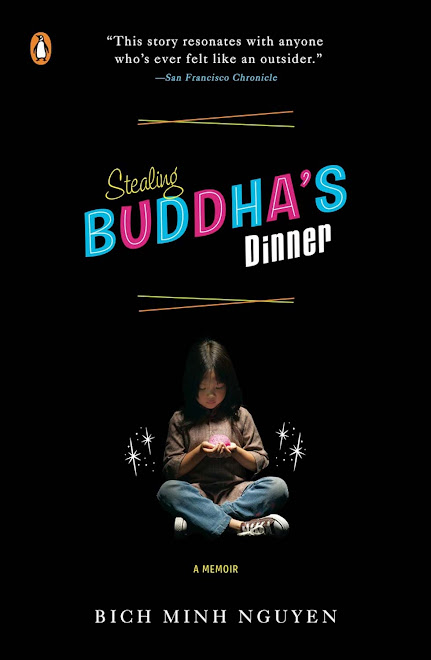
After much deliberation and narrowing down titles, we have chosen Stealing Buddha's Dinner by Bich Minh Nguyen as our selection for the 2010-11 academic year.

Don't know much about this book? Don't worry! Here's some information to get you started:

In her memoir Stealing Buddha’s Dinner, Vietnamese immigrant Bich Minh Nguyen chronicles this new life as she navigates competing and conflicting cultural identities and struggles to fit into a community where she often feels like an outsider. Bich forgoes any rigidly defined identity and instead creates her own. Studded with pop culture references and narrated with a youthful, honest, and accessible voice, Stealing Buddha’s Dinner inspires readers to investigate their cultural influences, explore their family roots, and discover how contemporary events have affected their lives.

The iRead program will be integrated into the Foundations of Scholarship and Learning course being developed for entering freshmen students. We are in the process of planning iRead events and activities related to the themes of the book. If you have any suggestions about community resources or ideas for activities, please contact Eloise Hitchcock (ehitchcock@cumberland.edu), Director of the Vise Library. Watch the blog for more information about upcoming events!