Showing posts with label recap. Show all posts

Tuesday, March 22, 2011

iRead recap: Dr. Claire S. King

On March 22nd, 2011, Cumberland University was treated to a presentation by Dr. Claire S. King of Vanderbilt University as part of Vise Library’s ongoing iRead program. Dr. King’s presentation was titled “Imitation of Life: Mediated Constructions of Gender”. She began by showing a provocative advertisement of a beautiful woman in lingerie. The text of the ad said “Bet you didn’t notice the armadillo”. Sure enough, there was an armadillo sitting on a chair next to the half-naked woman. Dr. King explained the various meanings of this ad, from woman as an object of heterosexual male gaze, to the humor inherent in pointing out that a va-va-voom female tends to draw attention to one’s eye to the exclusion of anything else in the picture.


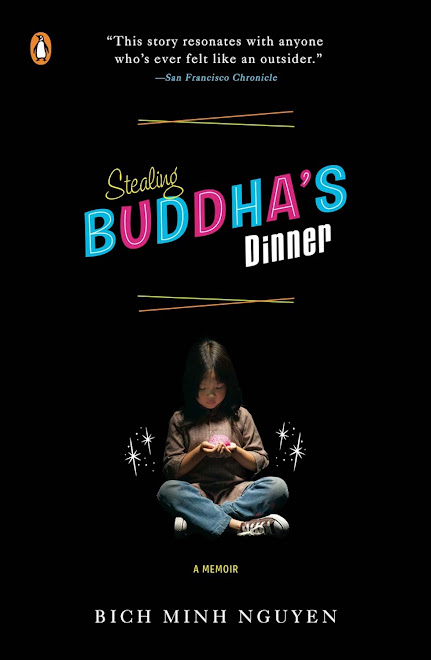
Dr. King went on to explain the concept of “gendered looking”—the idea, exploited by movies, TV, and other visual media, that women are to be looked at and men do the looking. She tied this point back to Cumberland’s iRead selection, Bich Minh Nguyen’s Stealing Buddha’s Dinner, by pointing out the impact that popular culture and other children had on the author while growing up: Nguyen learned what she was “supposed” to eat, wear, and play by observing others. Indeed, her desire to be like her American classmates was strong enough to spur her on to seek out images and culture that would help her fit in.


Dr. King then explained the position of a particular scholar, Judith Butler, who argues that gender is culturally constructed and there is no such thing as “natural” gender. According to Butler, gender is a choice (often made unconsciously and sometimes even made for us, such as when baby girls are dressed in pink) and a performance we engage in every day. Butler challenges the idea of a “true, authentic self”, something that is a dearly held belief among many individuality-loving Americans. Instead, Butler argues that we all look outward for cues on how to adopt and form an identity.


Dr. King was an engaging speaker who was able to take complex and controversial theories and clearly explain them in an accessible way. Her friendly demeanor made it easy for audience members to ask questions both during and after the presentation. It was a real treat to hear Dr. King speak on the fascinating issue of gender and media.

Wednesday, February 23, 2011

iRead recap: Dr. Susan Schoenbohm

Susan Schoenbohm was the iRead guest speaker on February 22, 2011. Dr. Schoenbohm is currently the Practice Leader at the Nashville Zen Center. She has taught philosophy at the University of the South and Penn State University, and she teaches Buddhism in the religious Studies Program at Vanderbilt.

Dr. Schoenbohm’s talk was about the history, philosophy, and practices of Buddhism. She explained that there are different forms of Buddhism with different understandings of its teachings. Zen Buddhism is a form of Ch’an which practices Dhyana, sitting meditation, to learn the teachings of Buddha which can not be learned through words or doctrine. Like Buddha, enlightenment can be gained through meditation practices. She brought with her a statue of Buddha and explained in Zen philosophy it is a symbol of meditation. In other Buddhist traditions the statue of Buddha is revered in veneration of the enlightenment experience. However, Buddha is not considered a god and did not claim divinity.

Buddhism was born in Northern India and the early practices drew upon Hindu worship. As it spread throughout Asia, it took different routes and developed different forms. The early teachings of Buddha were transmitted orally and memorized by nuns and monks. Later they were written down but ultimately there were many variations in the teachings. There are two major branches of Buddhism, Theravada, and Mahayana. Mahayana tradition includes seated meditation and does not focus on the writings, but emphasizes what Buddha himself practiced. Practice undergirds all of the teachings. The most important truth in Buddhism is the realization that everything is impermanent. After all of Buddha’s seeking, he could not find anything that lasts forever.

Buddha was a Prince, Siddhartha Gautama, who was destined to be a holy man. His father did not want this so he protected him with a lavish lifestyle and kept him sheltered from the world. One day Buddha wonders from the palace and sees poverty, disease, old age, and death. He is inspired to understand suffering and goes on a spiritual journey in which he develops a philosophy based on Four Noble Truths. The First Noble Truth is called Dukkha meaning bitterness of life and its dissatisfying nature as it is always undergoing impermanence. The Second Noble Truth is the cause of life’s dissatisfactions, clinging to impermanent things. The Third Noble Truth is Nirvana. It is the cure for clinging and leads to freedom from entanglement with impermanent things. Seated meditation, as Buddha practiced, is itself enlightenment. The Fourth Noble Truth is the Eightfold Path, the practice of right thought and finding a balance.

During her talk, Dr. Schoenbohm led a short meditation session for the group. We focused on straight posture, breathing, and freeing our minds from thoughts. By practicing a lot, she told us, we can quiet our minds from fears, hopes, desires, and expectations. Through meditation we can develop understanding and compassion by realizing that we are all interconnected and that loss is inevitable.

Wednesday, November 17, 2010

iRead recap: Jose Gonzales from the Coalition for Education about Immigration

Jose Gonzales from the Coalition for Education about Immigration (CEI) was the featured speaker. CEI’s mission is to provide the community with clear and accurate information that will help people adopt reasonable, fact-based conclusions about the immigration debate. He provided us with some interesting information about the immigrants in the United States and Tennessee.

In 2005 there were 35 million immigrants which are about 12% of the total population representing diverse social, religious and cultural backgrounds. Immigrants are from many nations and about half of them are from Latin America. Most are young, married, have jobs, and half report speaking English very well. A large percentage is in the United States legally as permanent residents or naturalized citizens. Only a small percentage are undocumented.

The majority of foreign born residents are Latino which is the largest and fastest growing minority in the United States. They participate in the economy by working, consuming products and services, and paying taxes, and they are active in the politics as both public servants and voters. More tortillas are sold in America than hot dogs and salsa outsells ketchup!

There are many myths about immigrants such as they are taking away jobs from other Americans and they come here to get on welfare and take advantage of social programs. Mr. Gonzales informed us that unauthorized immigrants are not eligible for these services. Additionally, unauthorized immigrants who have jobs are given a special identification number to pay income taxes and social security withholdings, even though they are not eligible for benefits. Furthermore, many immigrants are entrepreneurs and have their own business which brings jobs to the community.

Many immigrants come to Tennessee for the same reasons as those who are born in the United States: jobs, moderate weather, and good quality of life. They often leave their home countries due to undesirable economic or other bad conditions. Globalization of labor trends is another push factor. When the North American Free Trade Agreement (NAFTA) was passed by Congress, American agricultural products flooded the Mexican market. Many farmers could not compete so they left to find work on farms in the United States.

Mr. Gonzales ended his presentation with information about the Dream Act. Many children of undocumented immigrants come here at a young age and attend school from kindergarten to graduation with a high school diploma. Even though they have lived here most of their lives, they are not eligible to attend college. The Dream Act would allow them to adjust their legal status to be here legally. If passed, this legislation would enable many bright young immigrants to achieve their dream of a college degree.

This was the last iRead session for the fall semester. The sessions for the spring semester are in the final planning stages and will be announced as soon as they are finalized. The library staff would like to thank everyone who has attended the sessions so far, and we look forward to another semester full of great programs and speakers!

Tuesday, October 26, 2010

iRead recap: Dr. William Brinker

Our second iRead program for the book Stealing Buddha’s Dinner was a presentation by Dr. William Brinker, Emeritus Professor of History from Tennessee Tech. Dr. Brinker spoke about the consequences of the U.S. withdrawal from Vietnam on the Vietnamese. He began with information on the history of Vietnam. It had been a French colony and the Japanese had a wide influence there during WWII. There were various political groups who disapproved of colonization and wanted Vietnam to be an independent country. One of these groups was led by Ho Chi Minh, a Communist, who gave a speech in Hanoi in August 1941 declaring independence, quoting from the US Declaration of Independence. These rebels took over territories and placed them under Communist rule. When the French pulled out of Vietnam in 1954, the country was divided into two as part of the Geneva Congress agreement, with the North conceded to Ho Chi Minh. This is when the author’s family moved to South Vietnam.

South Vietnam was given a chance to create its own stable government with support from the United States. At first the U.S. sent advisors and trainers to help the South resist the Communists, but soon the conflict escalated. By 1960, the U.S. had over 500,000 combat troops there. The U.S. began withdrawing in 1973, and withdrew all troops by 1975. The author’s family had been part of the South Vietnamese who had resisted the Communist take over. They had to leave or they would have been imprisoned or killed. Bic and her family were able to board a naval vessel to get out of Vietnam before the Viet Cong took over the South.

When the U.S. withdrew in 1975, they severed all relationships with Vietnam and would not have anything to do with them, as if they did not exist. It was not until 1994 that the Clinton Administration recognized the legitimacy of the Vietnam government.

At first the Ho Chi Minh government was based on Stalinism, but it was not successful. They soon dismantled this system of government and allowed for capitalism and private enterprise. Dr. Brinker visited the country in 1988 and commented that everything was working beautifully. The Vietnamese people he met expressed no animosity toward Americans. Dr. Collier, who visited Vietnam in 2009, also indicated that here was no resentment toward Americans during his visit.

Monday, October 4, 2010

iRead recap: Video conference with Bich Minh Nguyen

Vise Library was very fortunate to sponsor a video conference via the Internet with the author of Stealing Buddha’s Dinner, Bich Minh Nguyen. Professor Nguyen is currently an Assistant Professor of English at Purdue University in Indiana where she teaches literature and creative writing. She told the audience of Cumberland University students, faculty, and staff that she was honored to have her book selected for our campus reading program. Professor Nguyen began with an overview of the book and provided some background on her writing process.

The story begins when her family came to the United States in 1975 from Vietnam after the fall of Saigon. Her father and uncles had served in the army and they had to leave to avoid being imprisoned. It was a last second decision to leave their home. They raced to board a ship out and went to a refugee camp in Little Rock, Arkansas and later settled in Grand Rapids, Michigan. She grew up in this small town during the late 70’s and early 80s before the multiculturalism we have today, when there were no sushi restaurants. The culture clashes she experienced provided material for her writing and she commented that adversity is often good material for stories.

Professor Nguyen started writing Stealing Buddha’s Dinner about 8-9 years ago after working on some essays concerning immigration. She realized that her childhood memories would make an important story about her family, their heritage, and her past experiences. She chose the genre of non-fiction as the story was “too true” for fiction or poetry. Writing a memoir allowed for the intersection of reflection and narration. She was amazed at the memories that came back to her with clarity and commented that there is a reason you can not forget something, even a hostess cupcake. Food became the primary organizing principle for the book as she realized that many of her childhood memories involved eating. Food defines who we are and what we desire. Family get togethers, birthdays, Thanksgiving and other events revolve around food not just due to the need to survive, but also to support our identity. You can learn a lot about someone just by looking in their grocery cart or refrigerator. We all have to decide what to have for dinner and are defined by what we eat in terms of who we are, what we can afford and where we come from.

The author talked about growing up in the 1980s, “a bad fashion decade,” and her desire to fit-in somewhere. These feelings of being an outsider transcend race and gender. She remembers reading Pride and Prejudice, Little Women, and the Little House on the Prairie books and relating to the characters, even though it would seem she did not have anything in common with them. She saw herself as a completely American kid, eating junk food and watching TV, but felt that other people did not see her that way. She wanted to be acknowledged as an American. The definition of being American is expansive and inclusive, but it took a long time for her to believe it applied to herself. Books empowered her and gave a sense of permission to see what is possible. She encourages reading and believes in the power of literature to find insights and understanding.

Before publishing Stealing Buddha’s Dinner, the author shared the story with her family. They were interested in seeing her perspective and it opened up communication among them. It is a risk to write the truth, but it is more meaningful if it is “close to the bone.” Readers connect to a story that is real. She sees regrets as important to acknowledge in order to gain perspective. The author wishes she had not been so shy as a child and had asked more questions. She also wishes she had learned more about her Vietnamese heritage from her grandmother.

Professor Nguyen mentioned that she had visited Tennessee and that is important to go places and see new landscapes, as well as try new foods. She advised doing this in your 20s as this is when you have time in your life to travel. If you get the chance to do it, it is worthwhile. She spoke of taking off to Rome with some friends when she was a student with no plans and just their backpacks. These opportunities may only come when you are young and that time in your life closes quickly. It is important to “get outside ourselves a little bit” to gain new insights about the world.

There were a few questions at the end of the presentation. One person asked what her favorite food is. She said it changes a lot but right now it was bacon. She mentioned eating a candy bar with bacon wrapped in chocolate which she described as worth trying, but a little strange. She likes sweet and salty and is especially fond of ice cream, cakes, cookies, and mac & cheese. Professor Nguyen wanted to know the favorite food of the student and it turns out it is also bacon.

The author was also asked about her current writing project which is a novel about a Laura Ingalls Wilder scholar. She has always been obsessed with the Little House on the Prairie books and believes in following her obsessions. Her latest novel, Short Girls, was published in 2009. It is a work of fiction so there is a lot of friction and conflict. Some people in her family thought she was writing about them but it is not a true story. She commented that “fiction is a lot more dangerous than non-fiction.”

She was also asked about her process in writing Stealing Buddha’s Dinner. Professor Nguyen said she wrote each chapter on its own and it was not until the 5th or 6th revision that she realized that food would be the organizing principle. As she wrote, she hoped the ending would reveal itself which it did and she wrote the final two chapters last. The author commented that the writing process is long and not straightforward. There is a lot of revision. She cautioned never to turn the first draft as it takes several drafts to say what you want to say. “Authors write not to be understood, but to understand.”

Professor Nguyen concluded with a few remarks about the value of attending college. She vividly remembers being a college freshman and said it was the best year of her life. Even though she was just a couple hours away from home, it seemed so far away and she was on her own. She commented how great it was that you could take whatever classes you wanted and that there were so many interesting subjects to explore. She enjoyed going to the library to look things up and to “get lost in a book.” College is a great time to find out what interests you and she sees great value in attending college just for the fun of learning. Jobs and careers will come, but it is important to explore ideas while you have the opportunity. She was the first in her family to attend college and she sees this time as a “profound gift.”

A DVD of this video conference is on reserve at the Vise Library.